Saturday, August 6, 2011

Friday, November 20, 2009
'The Artist's Signature' - Pages & Art

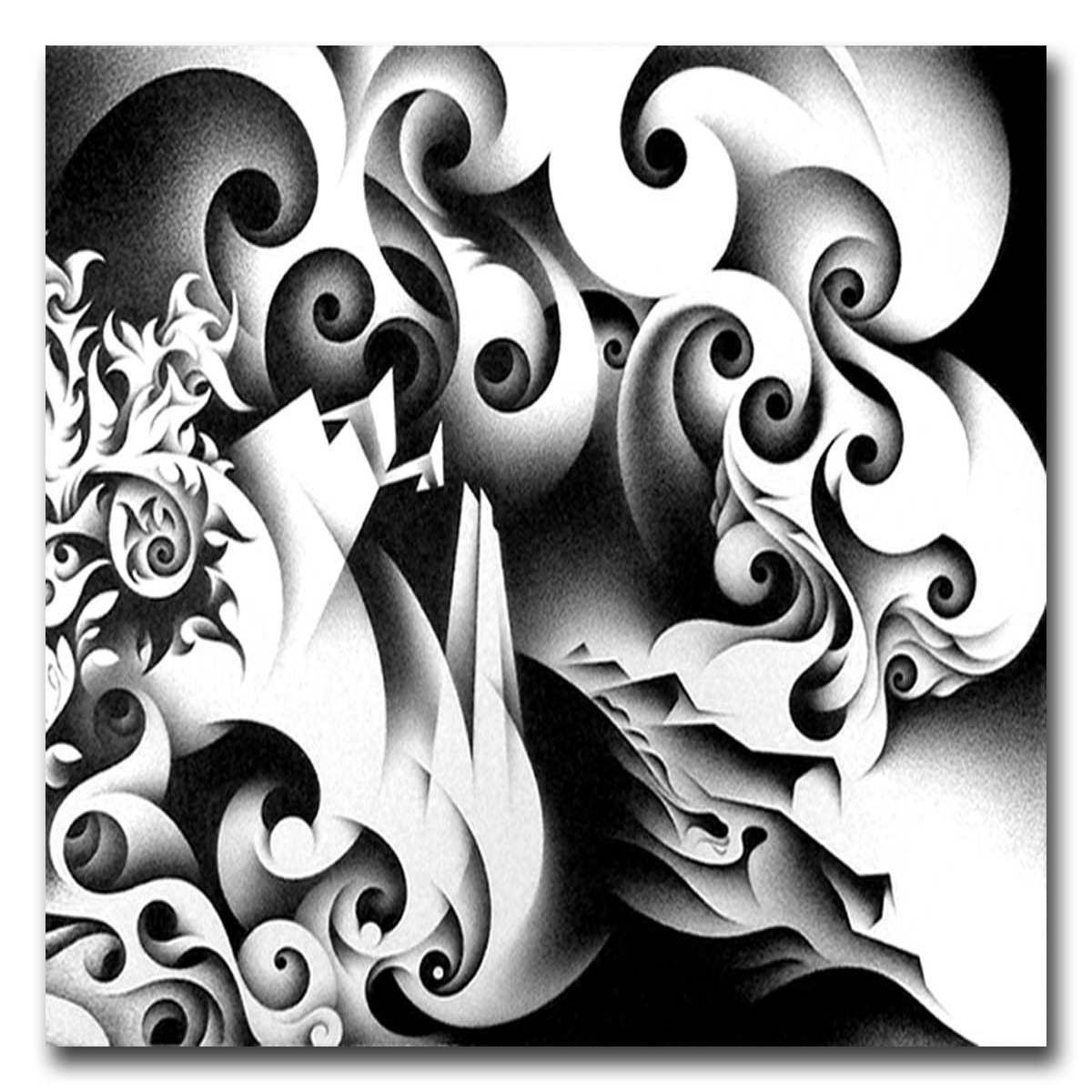
The above image is my title plate/opening shot. And the one below is the beach of the imagination. I often find that my concept art enhances my writing, and vice versa.

TAS Online 01
I have quite a bit more written than this, nearly two-hundred pages of script, with around fifty pages of background and techy stuff, not to mention a lot of concept art. I know two-hundred pages is a pretty long movie. But I write everything down, and toss the awful bits later. I have a solid beginning, and a terrific ending. I just need to flesh out the middle a little more and I've got a pile of paper that no one will ever look at twice.
I think a movie should be a unified whole, both verbally and visually. I've worked out a way of incorporating pi into the basic design motif of the entire film.
My take on a film version of 'Contact' is that the 'download' should constitute the body of the movie. Start with Ellie on the beach, more or less, visualize her unwound memories, and then return to 'reality' about three-quarters the way in. This allows far more freedom than a straight linear telling. I can jump around in time the way a mind at rest naturally meanders from place to place.
It occurs to me that Zemeckis may have been trying to do exactly this with the eye 'pull out' and 'push in' at the beginning and near the end of the film. But subtlety is relative, and in this case is lost in background noise.
Anyway, I think this material deserves better.
Saturday, November 14, 2009
Contact Apologetics: An Open Letter to Whom it May Concern

To mark the anniversary of Carl Sagan’s 75th birthday, the big man was remembered publicly by those many people who worked with him and knew him best. I especially appreciate the personal remembrances as I have been a great fan of Carl Sagan since Cosmos in 1980.
But I am less appreciative of, and far more resentful and confused by the glowing references I heard regarding the movie Contact.
So I’d like to ask a few questions…
Is there a cut of this film of which I am unaware?
I love movies. I am aware that film crews shoot more scenes than appear in the final release. And owing to the flexibility of the market, director/writer/extended version cuts are often available with the original artistic vision restored. This is especially true of films with a richness of content that exceed the imaginative limitations of a studio.
I’ve seen Contact a few dozen times now and I honestly don’t know what warrants such universal praise among Sagan devotees. Maybe it because he died too young and so close to the film's release and people are just being polite.
But it's been some time now and I have yet to see a re-edit, re-release, special edition, tenth anniversary, redeaux... something that would indicate this movie was anything but a lowest-bidder contract job. There are no deleted scenes, no penetrating commentary. No one bothers to deconstruct its hidden meaning, its symbolism, its camera-work, because there is nothing to deconstruct. No one cares because there is nothing to care about.
What Contact lacked in content it made up for in superficiality.
I’ve seen Contact a few dozen times now and I honestly don’t know what warrants such universal praise among Sagan devotees. Maybe it because he died too young and so close to the film's release and people are just being polite.
But it's been some time now and I have yet to see a re-edit, re-release, special edition, tenth anniversary, redeaux... something that would indicate this movie was anything but a lowest-bidder contract job. There are no deleted scenes, no penetrating commentary. No one bothers to deconstruct its hidden meaning, its symbolism, its camera-work, because there is nothing to deconstruct. No one cares because there is nothing to care about.
What Contact lacked in content it made up for in superficiality.
Are there other people out there in the universe down here on Earth?
I was under the distinct impression from episode 13 of Cosmos that ‘We are one planet.' But the radio broadcasts in the opening scene of Contact are from almost exclusively American sources.
Well, are we one planet or not?
Saturday, November 7, 2009
Happy Carl Sagan Day!

Today marks the First Annual Carl Sagan Day... observed two days before what would have been his 75th birthday. Official observations will be held in Florida.
Besides the novel Contact, Cosmos is to me the best of his public works. So nerd up, gather some friends, and watch your favorite episode to celebrate the life of this very important person.
Monday, November 2, 2009
CARL SAGAN DAY

The first annual 'Carl Sagan Day' will be observed on November 7th, 2009... two days before what would have been his 75th birthday. I wish I could go.
Sunday, October 25, 2009
Apparent Brightness

So as not to be accused of being all ass kissy about Kubrick, let me point out a longstanding peeve. The aperture of a camera must be wide open to capture faintly visible objects like background stars. But when a bright object like the day side of the moon, and particularly the sun, is in frame, the aperture is nearly closed and the chance of those very dim and distant background stars registering is nil.
Are you listening, you idiot moon hoax 'I can't see stars in the Apollo footage' ass hats?
For as long as there's been celluloid, there has been an assumption of audience stupidity by film and television studios that wrongly perpetuates the convention that stars are always visible in space. But in space, light is not just relative, it's very relative. It's ironic that this Hollywood falsehood lead to such a monumental misunderstanding of real life.
'I know the real footage of the moon landings I saw was faked, because the faked footage of the moon landings I saw looked so real... obviously.'
In 2001, Kubrick either didn't know he was doing anything wrong, or went along with it for the sake of his little movie.
It's a minor detail and not really worth mentioning. But I went ahead anyway and made these illustrations to show how 2001's opening shot should have looked...
The background stars would be visible behind the eclipse of the moon until the instant the sun breaches the horizon. At that moment the stars would vanish, owing to the new camera setting which requires a smaller aperture so that details on the moon can be seen. Otherwise the moon would be washed out and the sun too bright. Think of exiting a darkened movie theater on a bright sunny afternoon. The eye constantly adjusts to differing degrees of light.
Also, a crescent would advance along the top of the moon as it descends out of frame. Same goes for the Earth...


Tuesday, October 20, 2009
Life... in Pictures

I don't think I can ever adequately express the feeling I had the first time I saw '2001: A Space Odyssey.'
Tenth grade, 1982. My English Lit teacher showed us a horrid, non-letter boxed, pan&scan version on a twenty-four inch TV to kill the last few days before Christmas break. Despite the lousy format, I was floored.
I remember having seen a few photo stills of 2001 in my various scifi/special effects genre books, but they never engaged me, flat as they were. Without music, I guess, and motion, they had no depth.
Our teacher couldn't stuff the whole film into a fifty minute class. But on first viewing he managed to get to the flying bone transition before the lunch buzzer rang. I was hooked. I couldn't wait to get to school the next day.
I've seen it a hundred times since. But strangely, when thinking back on my first few viewings, I had the distinct impression of having seen the film in black and white. Maybe my brain misinterpreting its starkness, and desaturated my memory. When I watch it now I am often surprised by the amount of color it contains.
I don't ever remember feeling a lot of empathy for a Kubrick character (Spartacus aside). Kubrick doesn't do that. I am always very interested in what they're doing. But how they're feeling doesn't leap off the screen and into the audience. It stays up there.
There's an imaginary narrative at the beginning of each chapter of the book 'Galaxies,' by Timothy Ferris. It describes a relativistic, near-light speed spaceship journey across the universe. The explorers outlive the Earth and Sun, not to mention their loved ones, by trillions of years as they plow through intergalactic space toward the edge of the ever expanding visible universe. That's how 2001 made me feel. Lost in the void... in a good way.
After we finished the movie I went to the school library and found the book upon which it was based. I tore through it, and everything else I could find by Arthur C. Clarke. I didn't realize it at the time, but while Clarke certainly contributed, he wasn't actually the person responsible for the visual mind trip that was the movie. It was Stanley Kubrick who made this thing possible. Watch, 'A Life in Pictures,' which beautifully details his technique.
Monday, October 19, 2009

Tuesday, October 13, 2009

Sunday, October 11, 2009

Monday, October 5, 2009
To Catch a Phrase...

I don't get it...
Sagan could turn a phrase better than anyone. Need proof? Watch Cosmos. He had an economy of speech, no doubt honed by years of classroom lecture, that communicated, and endeared, and endures... and simply made you want more.
And yet there isn't a single memorable quote in the entirety of Contact... except for one.
'Seems like an awful waste of space.'
...awful ...waste ...of space.
Isn't life just like a box of chocolates?
Sagan could turn a phrase better than anyone. Need proof? Watch Cosmos. He had an economy of speech, no doubt honed by years of classroom lecture, that communicated, and endeared, and endures... and simply made you want more.
And yet there isn't a single memorable quote in the entirety of Contact... except for one.
'Seems like an awful waste of space.'
...awful ...waste ...of space.
Isn't life just like a box of chocolates?
Saturday, November 10, 2007
Sunrise, Mars

I'm not sure why I made this... I guess I was inspired by this Spirit photo of a Martian sunset. And I always liked those early twentieth century 'cigar' shaped rocket ship designs so often used on pulp space novel covers and in Bugs Bunny cartoons.
Tuesday, October 2, 2007
The Muck Knows

Knowledge flows up from the muck, not down from on high. We know what we know because we earned it, through hard work. Not because it was whispered in our ears by angels. We earned what we know individually and collectively.
Science has reduced religion to a kind of 'insert god here' proposition whenever the remaining faithful are confronted with a scientific mystery. And since science has effectively pushed that insertion point back to the beginning of the universe, the only remaining place a believer can put god is behind the big bang itself.
The only thing we'll find behind nature, is more nature.
Friday, September 21, 2007
Wormholes

The wormhole journey as portrayed in Contact is a cheap thrill ride unworthy of the material.
OK... So the pod drops through the center of the popcorn machine and into a wormhole aperture. Great, with you so far... But the red flashy-crap, followed by a star-field, followed by being sucked into some kind of funnel/vortex/tunnel thingy doesn't work.
OK... So the pod drops through the center of the popcorn machine and into a wormhole aperture. Great, with you so far... But the red flashy-crap, followed by a star-field, followed by being sucked into some kind of funnel/vortex/tunnel thingy doesn't work.
Here's how it should have gone... The machine should have been more like the one in the book where a stationary pod is surrounded by a device that generates a pucker in spacetime to which an awaiting wormhole nozzle can attach. The wormhole itself is an invasive sphere which envelopes a local area of spacetime; the space enclosing the pod when the machine reaches full power. Through a window, a passenger would see her surroundings instantly change from departure point to destination without ever experiencing a tunnel.
Yes, Sagan used tunnels in the book. But I think he included the tunnel adventure more for entertainment than scientific value. I don't know.
In the book the pod is completely encased, which conveniently doesn't allow an outside observer to see anything. But the popcorn machine works around this problem by having the walls become transparent within Ellie's line of sight? What the hell? This only adds too the notion that she's nuts.
The 'Popcorn' Machine

I’ll give the producers credit for one thing... representing the Machine as a large open air device was a good idea. It was visually interesting, and it implies a technology that was extra-worldly. But the details are all wrong and it is too complicated.
The novel states that the Machine is not a wormhole generator, it doesn't have to be. The Aliens already have wormhole generators. They can fashion a hole through to us easier than transmitting the means for us to go to them. All they need from us is the destination, a specific time and place through which they can enter our space. All they need from us is a 'here,' and a 'now.'
The Machine is the last piece of the wormhole puzzle, the final and simplest link in the functionality of the wormhole network. Its only purpose is to make a small dent in spacetime to which an awaiting wormhole nozzle can attach. The Machine is only a spacetime marker.
The novel states that the Machine is not a wormhole generator, it doesn't have to be. The Aliens already have wormhole generators. They can fashion a hole through to us easier than transmitting the means for us to go to them. All they need from us is the destination, a specific time and place through which they can enter our space. All they need from us is a 'here,' and a 'now.'
The Machine is the last piece of the wormhole puzzle, the final and simplest link in the functionality of the wormhole network. Its only purpose is to make a small dent in spacetime to which an awaiting wormhole nozzle can attach. The Machine is only a spacetime marker.
It could have been anything, but for proper dramatic reasons Sagan chose a device that has 'weighty energy' for his novel. And because international cooperation was a major theme in his life he also made it hard to build, forcing humanity to work together, more or less. The movie Machine satisfies these goals in some ways, but not in others.
I like the rings. They have power through sheer size, and I like the way they resemble an electron shell. But the other more dangerous elements of the Machine are a transparent effort to manipulate the audience. For example, the fireworks display when the Machine fully activates is just a lot of noise. Maybe it's there to distract us from the complete lack of interesting dialog or a satisfying ending.
The drop/catch mechanism, the needless conflict over the inclusion of a chair, the goofy thing where Ellie's face peels itself off her head, the pod becoming transparent in her line of site and the child-Ellie face substitution have no intellectual justification. They are a discontinuous assemblage of unrelated nonsensicals.
Thursday, September 20, 2007
Scriptology

I've discovered a version of the Contact script dated September 8, 1995, credited to Carl Sagan and Ann Druyan, among others. This script is essentially what appeared on film.
So… I guess I can no longer pin all my dislike on the director/producers. It pains me to say this, but my problem with this movie is Carl Sagan.
Many artists have difficulty translating their work from one medium into another. If you enjoy reading Sagan’s books you know this guy simply could not touch lightly on any subject. It just wasn’t in him. He had to explore everything inside and out and three days from backwards. Of course he had to make certain concessions for the popular media, but he always managed to do so with clarity and effectiveness. In the bookish freedom from practical constraints on length he could be concise in message. In book form Sagan was finite, yet unbounded.
Film, however, is very different. Extraordinary films require extraordinary screenplays. The screenplay format forces you to do one of two things: write a condensed book, or write a movie. A screenplay is its own species, related to a book in DNA only. Where the book is the fossil, the screenplay is its living, animated descendant.
I think the screenplay, as a process, was fundamentally at odds with Carl Sagan. The physical limitation of a hundred and twenty pages must have felt suffocating to him. He couldn’t fit that big brain of his into that small a space. So instead of translating his work into film by penetrating its internal bureaucracy, Sagan simply gutted it.
He touched on the religion v. science conflict too lightly and with no rebuttal. He removed most of the dramatic potential by simplifying Ellie’s family structure. He took out all the good stuff: the wit, the skepticism, the cosmic perspective, and worst of all, the conclusion.
The inescapable irony is that Sagan probably would have been much more comfortable writing Contact as a television mini-series as it was originally conceived by he and Francis Ford Coppola. It could have been ten hours long. It could have been another Cosmos, and me and a hundred million other people would have loved every minute of it.
Of course Sagan was not a filmmaker. The filmmakers, however, are filmmakers, and they should have known better. They made a film based not upon Sagan’s wonderful book, but on his wholly inadequate screenplay.
I doubt Foster (didn't have to), or Zemeckis (did have to) ever read the book.
So… I guess I can no longer pin all my dislike on the director/producers. It pains me to say this, but my problem with this movie is Carl Sagan.
Many artists have difficulty translating their work from one medium into another. If you enjoy reading Sagan’s books you know this guy simply could not touch lightly on any subject. It just wasn’t in him. He had to explore everything inside and out and three days from backwards. Of course he had to make certain concessions for the popular media, but he always managed to do so with clarity and effectiveness. In the bookish freedom from practical constraints on length he could be concise in message. In book form Sagan was finite, yet unbounded.
Film, however, is very different. Extraordinary films require extraordinary screenplays. The screenplay format forces you to do one of two things: write a condensed book, or write a movie. A screenplay is its own species, related to a book in DNA only. Where the book is the fossil, the screenplay is its living, animated descendant.
I think the screenplay, as a process, was fundamentally at odds with Carl Sagan. The physical limitation of a hundred and twenty pages must have felt suffocating to him. He couldn’t fit that big brain of his into that small a space. So instead of translating his work into film by penetrating its internal bureaucracy, Sagan simply gutted it.
He touched on the religion v. science conflict too lightly and with no rebuttal. He removed most of the dramatic potential by simplifying Ellie’s family structure. He took out all the good stuff: the wit, the skepticism, the cosmic perspective, and worst of all, the conclusion.
The inescapable irony is that Sagan probably would have been much more comfortable writing Contact as a television mini-series as it was originally conceived by he and Francis Ford Coppola. It could have been ten hours long. It could have been another Cosmos, and me and a hundred million other people would have loved every minute of it.
Of course Sagan was not a filmmaker. The filmmakers, however, are filmmakers, and they should have known better. They made a film based not upon Sagan’s wonderful book, but on his wholly inadequate screenplay.
I doubt Foster (didn't have to), or Zemeckis (did have to) ever read the book.
Wednesday, September 19, 2007
The God of Hollywood

Contact, the movie, is a thing where the only standard of evidence worth noting is human emotion. Contact, the movie, is a courtroom drama, where ones embarrassing moments count as empirical evidence. Contact, the movie, is a place where anecdotal evidence and conjecture will get you laid... Not necessarily a bad thing in itself, but it shouldn’t be the end product of this story.
Contact, the movie, is a bouquet of pretty flowers, that smell bad.
Contact, the movie, is a one-hundred and fifty-three minute long version of 'The Price Is Right.' You want an actual ending? I'm sorry, you've overbid.

OK, that was a cheap shot. Let's class it up a little bit. Why not 'Carl Sagan's Contact ~ The Fragrance?'

Bzzz, wrong. How about something in between... 'Carl Sagan's Contact ~ The Musical?'

(October, 2009: Yeah, they really did it.)
The book is filled with intrigue, history, genuine human emotion and grand motives by inscrutable, yet entirely real higher powers. It soars. It has a social conscience and a reason for being. It releases energy and comes to more than the sum of its parts.
This movie, on the other hand, comes to nothing.
The most glaring absence is of course the wonderful book ending where Ellie finds scientific proof of an intelligence that predates the universe. One might argue that this is too complicated for a movie. And I agree, but only insofar as it is too mathematical in nature. This concept only needed to be translated into the more visual medium. But instead it was simply dropped. And I do not think this is merely a case of expedient story telling. There is a more insidious force at work here.
The faithful hijacked this film and made it theirs. This movie celebrates the peculiar religious notion that the unknowable is a form of pure knowledge. What is wrong with this film is what is wrong with religion, where the meaningless question becomes an argument from authority. 'But who made the pretty flowers?'
So instead of discovering proof of a higher level of existence, our impotent heroine, Ellie (a.k.a., the poor little atheist girl) is left floundering in self-doubt. This is because religious people hate proof. They hate it to such a degree as to disallow evidence of their own argument.
In the end the protagonist becomes a thinly veiled TV evangelist complete with very public and tearful appeals to belief. She might as well be wearing a pink, cotton-candy wig and Spackle makeup. The producers of this film have cloaked ignorance in sentiment.
And that's not all they did. Crimes against art have here been committed. In the hands of these filmmakers the term 'science fiction' has taken on a completely unintended, and loathsome meaning. It has become an oxymoronic, grotesque parody of itself. One might as well classify this movie as 'religious fact.'
'The world is what we make of it.'
Yes, it is. When we are children. But adults are not permitted the childish luxury of making it up as they go. To paraphrase Sagan, at some point we must abandon our most cherished beliefs in favor of cold hard reality. The universe is no fairy tale. Sagan never pandered to children the way this film panders to the childish adults who still believe the universe is just a metaphor for a struggle between quarreling super beings. He gave it to us straight without appeals to mysticism.
Science and religion are not equal partners. There is no common ground between them, with the possible exception of using science to deconstruct the evolutionary imperative for religious belief. Beyond that science destroys religion. It kicks its ass. Sagan knew ancient fairy tales and modern science can never be reconciled, although he hedged his bets in public. But this rotten 'movie' gives the same weight to miracles as it does physics, perhaps more. It panders to the mob in the name of salted butter and soda pop.
I often hear people say that a movie can never be as good as the book. Boloney. Kubrick, among others, could do it because he knew the formula. Here's the formula: a movie is not a book. It doesn't have to be and it shouldn't ever be. What it does have to be is original to its own unique medium. Find an element of visual interest within the story and let that be your guide to translate the entire work.
In this regard Sagan handed the producers the key to this particular enterprise on a silver platter, and they missed it entirely. Within the last chapter of the book lay the movie. And again, the reason they left out this proof is because the truly faithful despise proof. To prove god exists negates faith.
The subtitle, instead of 'A Journey to the Heart of the Universe,' should have read, 'Don't Confuse Me with Facts.' This film is terrible. It is a complete surrender to abject unthink.
It abandons science. It embraces religion.
It's a betrayal.
Thursday, September 13, 2007

The Brave One

Jodie Foster is a fine actor. She is not responsible for her performance in Contact. She was given a terrible script and worse direction. She was strapped into a useless chair, within a gilded cage, and shot into space.
Foster was handed a character who apparently has undiagnosed multiple personality disorder, completely unfitting for the story. One minute she's a powerful, independent feminist, the next she's wallowing in self-pity and pandering to the stupidity of the mob.
And why the hell is this bitch crying?
Did you see the 'final statement' scene in the wonderful film, 'The Contender?' Senator Laine Hanson (Joan Allen) wins because she is unyielding in her principles. Hanson's statement should have been Ellie's statement, practically verbatim, before the machine selection committee in Contact.
Foster was handed a character who apparently has undiagnosed multiple personality disorder, completely unfitting for the story. One minute she's a powerful, independent feminist, the next she's wallowing in self-pity and pandering to the stupidity of the mob.
And why the hell is this bitch crying?
Did you see the 'final statement' scene in the wonderful film, 'The Contender?' Senator Laine Hanson (Joan Allen) wins because she is unyielding in her principles. Hanson's statement should have been Ellie's statement, practically verbatim, before the machine selection committee in Contact.
Instead... whimper.
Ellie is embarrassed by her atheism. Why? Because the last thing this movie wants is a strong nonbeliever with the courage of her convictions. The point of this movie is not science, or even skepticism; it is to buttress the weird religious idea that doubt and uncertainty are where god live.
He's there. He's waiting for you. You just have to concede his unknowability. At the end of this fucking movie reason and evidence and truth are suppressed by the inquisition. The bad guys win. And we lose.
Extraordinary movies require extraordinary screenplays.
What's a fine actor to do with a screenplay that isn't worth the paper it's written on? Answer: Cash your check and move on to something better.
Ellie is embarrassed by her atheism. Why? Because the last thing this movie wants is a strong nonbeliever with the courage of her convictions. The point of this movie is not science, or even skepticism; it is to buttress the weird religious idea that doubt and uncertainty are where god live.
He's there. He's waiting for you. You just have to concede his unknowability. At the end of this fucking movie reason and evidence and truth are suppressed by the inquisition. The bad guys win. And we lose.
Extraordinary movies require extraordinary screenplays.
What's a fine actor to do with a screenplay that isn't worth the paper it's written on? Answer: Cash your check and move on to something better.
Subscribe to:
Posts (Atom)